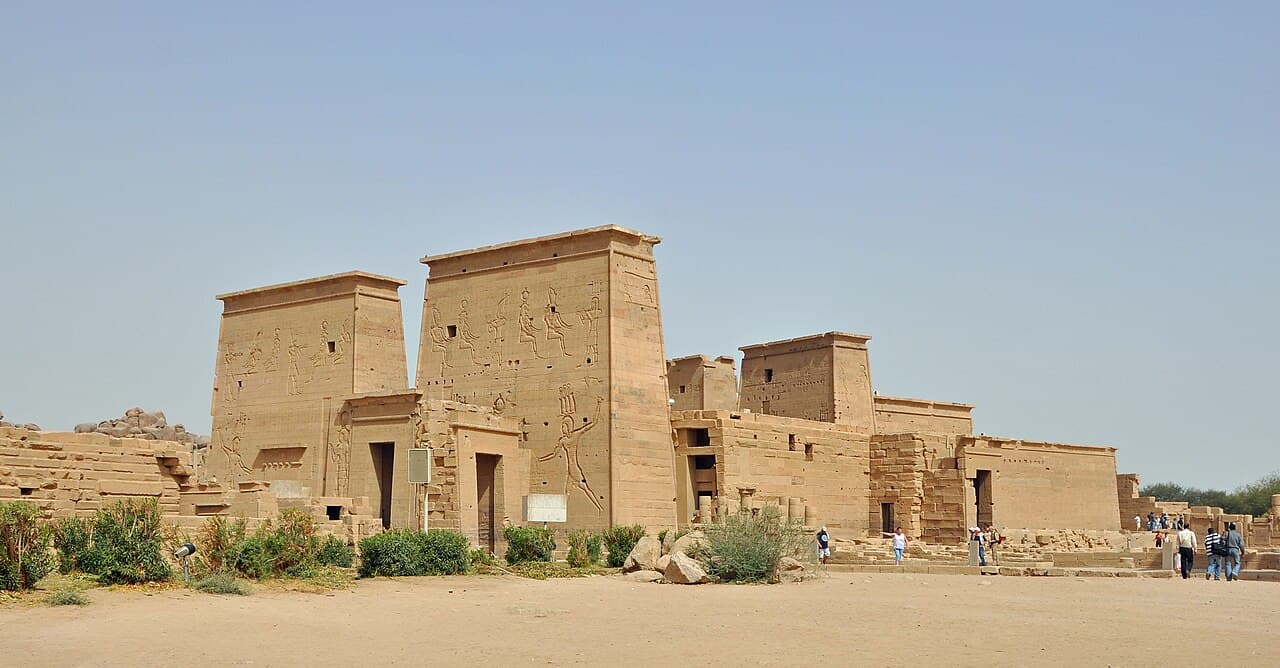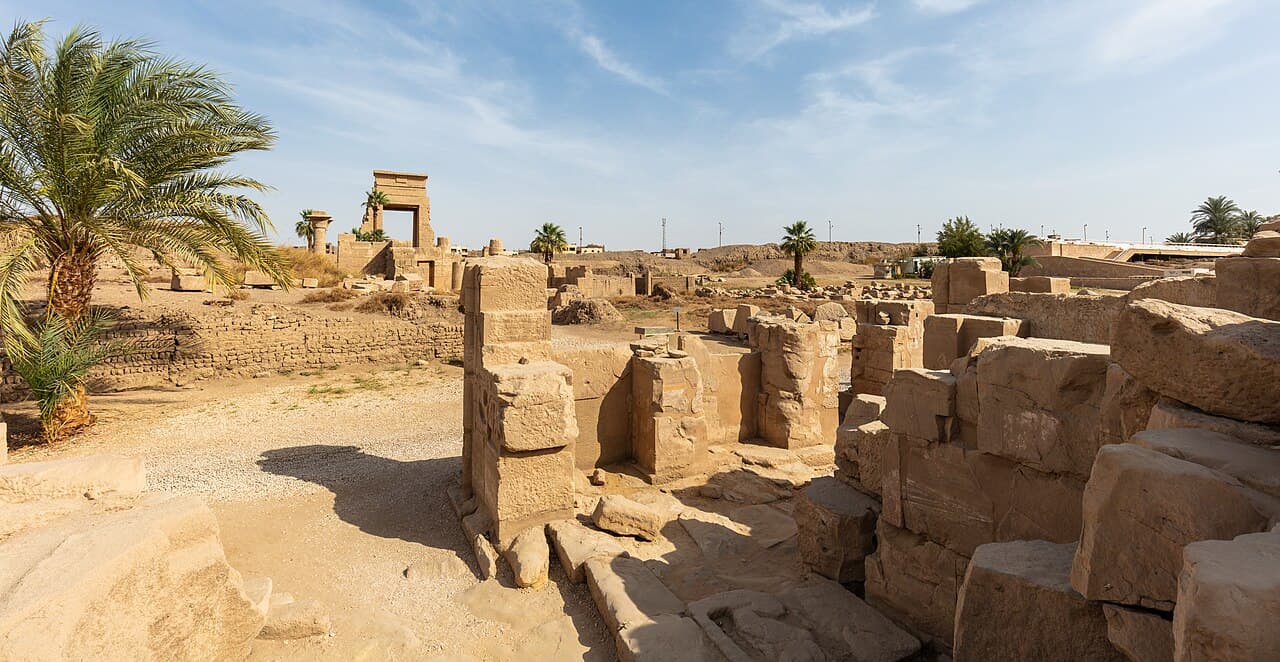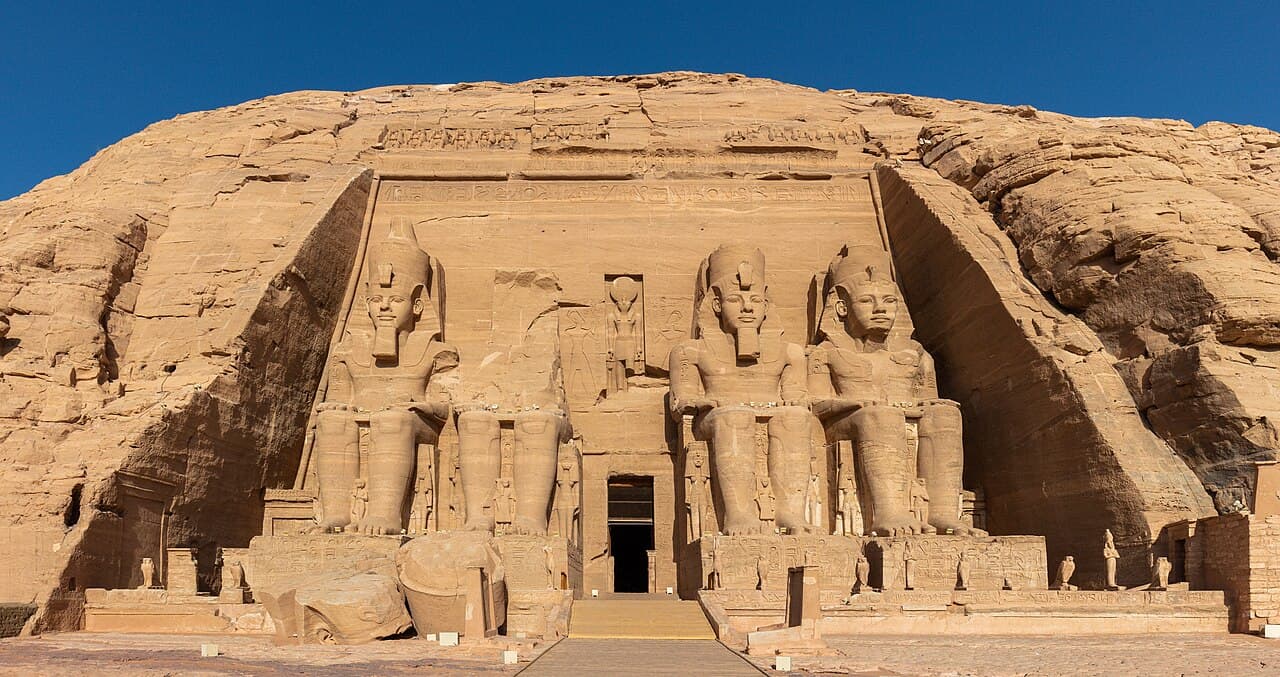
The rescue of monuments in Egyptian Nubia was not one operation and did not end when Abu Simbel was cut and raised. UNESCO’s Nubian Monuments property contains ten components. Its first five include temples moved during the international campaign from 1960 to 1980, while other components preserve quarries, settlement, tomb, monastic and cemetery landscapes around Aswan. Philae’s sanctuary moved to Agilkia; the Abu Simbel temples were relocated above the rising waters; the Nubia Museum later developed in response to the salvage campaign.
The famous engineering story is therefore only the middle of a longer conservation chain. Authorities first had to document places threatened by inundation, decide what could be moved, excavate or record material, reconstruct selected monuments and care for the results. Today the property still faces weather, tourism, development and management pressures. “Saved” describes a historic intervention, not a guarantee that stewardship is complete.
At a glance
Start here
- The UNESCO campaign ran from 1960 to 1980 and addressed a region, not only Abu Simbel.
- Five temple components were moved, while other World Heritage components preserve in-place Aswan landscapes.
- Relocation preserved major fabric but changed setting, so the modern intervention belongs in every interpretation.
- Conservation now depends on coordinated management, monitoring and honest visitor limits.
01
Define the threat before the rescue
The construction of the Aswan High Dam threatened monuments and archaeological areas with flooding. UNESCO and the Egyptian government responded through an international campaign beginning in 1960. The Ministry’s World Heritage page frames the affected zone from Aswan toward Abu Simbel and lists sites with different forms, dates and relationships to the river.
Inundation risk did not create one uniform conservation problem. A rock-cut temple, an island sanctuary, a settlement mound and a quarry could not all be treated by the same method. The first governance achievement was to recognize a regional emergency and organize documentation, expertise and funding across national boundaries.
Sources: UNESCO World Heritage Centre; Egyptian Ministry of Tourism and Antiquities02
Understand the ten-part serial property
UNESCO’s inscription joins ten components under one property. The first five include the moved temples at Abu Simbel, Amada, Wadi Sebua, Kalabsha and Philae. The remaining components include Elephantine, the granite quarries and Unfinished Obelisk, tombs, the Monastery of St Simeon and the Islamic Cemetery. The list preserves a historical corridor broader than royal temple architecture.
Serial status is a governance challenge as well as a curatorial strength. Components differ in location, environment, visitor pressure and conservation need. A management decision suitable for a reconstructed temple island may not suit quarry scars or an inhabited urban edge. Calling them one property creates a duty to coordinate without pretending they are identical.
Sources: UNESCO World Heritage Centre; Egyptian Ministry of Tourism and Antiquities03
Read Abu Simbel as monument and intervention
Abu Simbel’s temples were carved from rock under Ramesses II and now occupy a relocated setting created through the international campaign. Their survival allows architecture, sculpture and royal ideology to be studied, but the modern engineering should not disappear from the story. The present landscape embodies both ancient design and twentieth-century conservation choices.
Relocation required decisions about cutting, recording, reassembly, orientation and the visual relationship between temple and surrounding terrain. The sources establish the international rescue and the property’s significance; they do not justify treating the reconstructed setting as untouched. A truthful caption can admire the result while naming the intervention that made the visit possible.
Sources: UNESCO World Heritage Centre; Egyptian Ministry of Tourism and Antiquities04
Compare Philae’s island relocation
Philae presented a different problem. Its temples formed a layered sanctuary with Ptolemaic and Roman structures and a long religious history. The Ministry records their move from original Philae Island to nearby Agilkia. Conservation therefore had to address multiple buildings and their relationships, not a single façade.
The result preserves an ensemble while changing the island context. That tension should remain visible in interpretation. Visitors can study how courtyards, pylons, kiosks and smaller temples relate, then ask which aspects of the original topography could be recreated and which could not. Relocation protects material but cannot make place infinitely transferable.
Sources: Egyptian Ministry of Tourism and Antiquities; UNESCO World Heritage Centre; Egyptian Ministry of Tourism and Antiquities05
Include knowledge, landscape and community
The Nubia Museum grew from the same salvage history and was designed to present archaeological, geographic, social, cultural and environmental heritage. Its creation signals that conserving temples alone could not represent Nubia. Objects needed interpretation within a region shaped by communities, crafts and river environments.
A museum cannot replace a changed homeland, but it can refuse a monument-only narrative. Its displays and institutional history broaden the public record beyond royal commissions. That makes the museum part of conservation governance: it stores, studies and interprets evidence while giving the campaign’s consequences a durable educational setting.
Sources: Egyptian Ministry of Tourism and Antiquities; Egyptian Ministry of Tourism and Antiquities06
Recognize that risk continues
UNESCO identifies wind, temperature change, rain, humidity, birds, dust, tourism and development among pressures on the serial property. Relocation removed one existential inundation threat from selected monuments, but it did not end material decay or visitor-management challenges. Conservation becomes a continuing cycle of monitoring, maintenance and limits.
This changes the meaning of a closure or barrier. Restricting access may protect fragile fabric, manage crowding or enable work across a difficult site. The absence of a comprehensive management solution for every component is not an invitation for informal access; it is evidence of why coordinated planning, funding and capacity remain necessary.
Sources: UNESCO World Heritage Centre07
Ask who decides what happens next
Large rescue campaigns can produce a heroic story of engineers and international cooperation, but present stewardship depends on Egyptian authorities, site teams, researchers and communities. UNESCO status supplies a framework and scrutiny; it does not replace national law, local management or the practical work of maintaining paths, drainage, documentation and visitor systems.
The useful question after “How was it saved?” is “How is it governed now?” Look for current management plans, condition reporting and transparent explanations of change. Avoid demanding permanent access to every component. A site remains conserved only when authorities can respond to new evidence and pressure, even when the resulting decision disappoints a traveller.
Sources: UNESCO World Heritage Centre; Egyptian Ministry of Tourism and AntiquitiesUseful answers
Reader questions
Was only Abu Simbel rescued?
No. The campaign addressed many Nubian sites, and UNESCO’s serial property includes five moved temple components plus five other Aswan-area components.
Sources: UNESCO World Heritage Centre; Egyptian Ministry of Tourism and AntiquitiesWhere is Philae now?
Its monuments were moved from original Philae Island to nearby Agilkia Island during the Nubia campaign.
Sources: Egyptian Ministry of Tourism and AntiquitiesDid relocation preserve the original setting?
It preserved major physical fabric and reconstructed relationships, but the setting changed. Interpretation should identify both the ancient monument and modern relocation.
Sources: UNESCO World Heritage Centre; Egyptian Ministry of Tourism and AntiquitiesWhy is the Nubia Museum part of the rescue story?
The museum was founded in response to the salvage campaign and presents Nubian archaeological, geographic, social, cultural and environmental heritage beyond monuments alone.
Sources: Egyptian Ministry of Tourism and AntiquitiesAre the Nubian monuments now permanently secure?
No heritage site is maintenance-free. UNESCO identifies environmental, tourism, development and management pressures requiring continuing stewardship.
Sources: UNESCO World Heritage CentreRead the evidence
Sources and further reading
These sources support the relevant sections above. Plans and comparisons are editorial suggestions. Check operators for current arrangements.
- Nubian Monuments from Abu Simbel to Philae ↗UNESCO World Heritage Centre · Accessed 14 September 2026
Campaign dates, serial components, relocation, integrity, threats and continuing management needs.
- Nubian Monuments World Heritage Property ↗Egyptian Ministry of Tourism and Antiquities · Accessed 14 September 2026
Official list of ten components and Egyptian account of the High Dam rescue campaign.
- Philae ↗Egyptian Ministry of Tourism and Antiquities · Accessed 14 September 2026
Sanctuary chronology, component structures and relocation to Agilkia.
- Nubia Museum ↗Egyptian Ministry of Tourism and Antiquities · Accessed 14 September 2026
Museum foundation after the salvage campaign and broad Nubian interpretive scope.